Gallbladder Cancer Lawyer

A rare diagnosis.
A catastrophic delay.

Gallbladder cancer is uncommon, which is why it gets missed. When pre-op imaging showed the warning signs and they were not worked up, the delay becomes the case.

Availability
24/7 · No fee unless we win
Practice
Nationwide
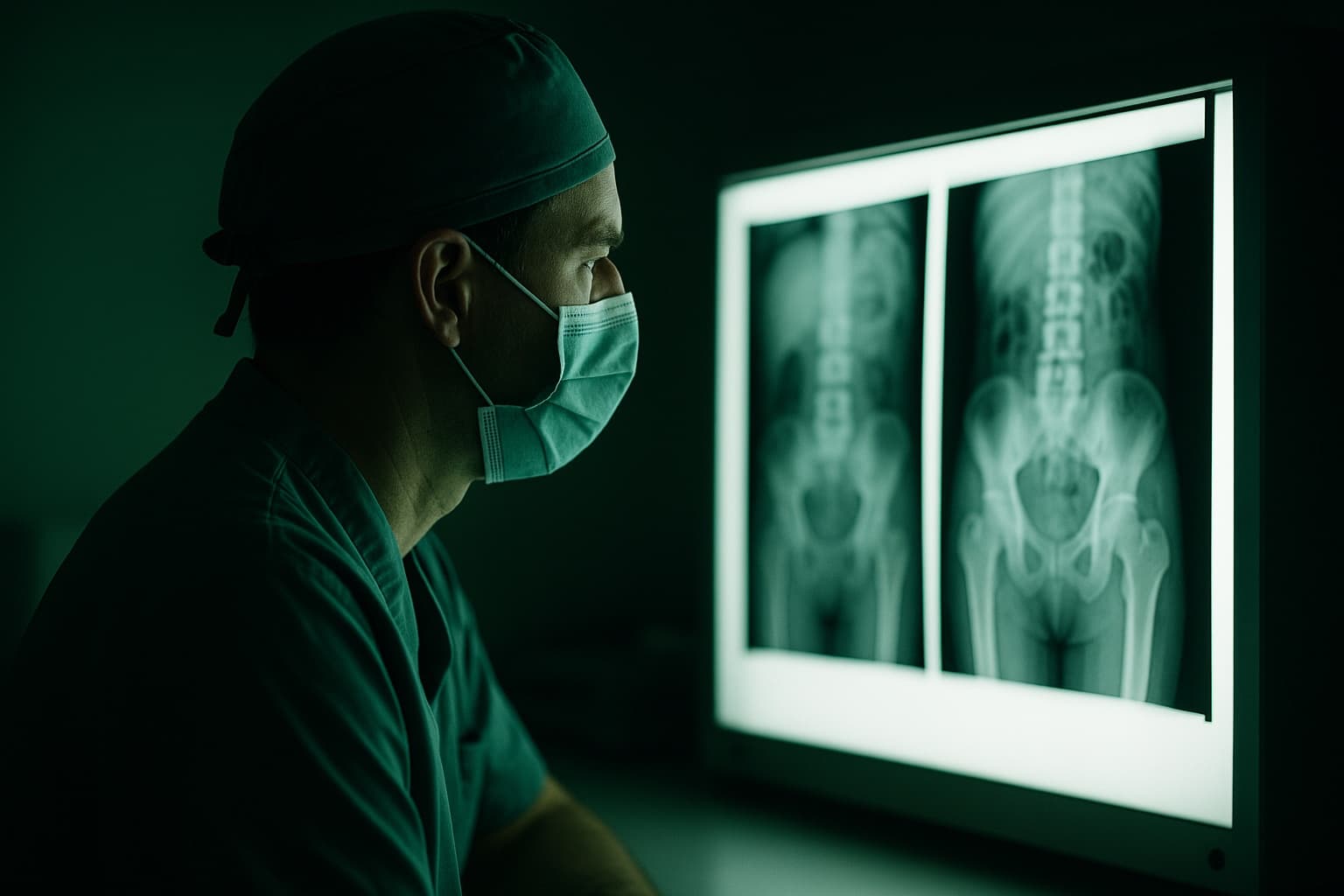
Radiologist workstation with abdominal imaging on monitor

When is a missed gallbladder cancer diagnosis malpractice?

Gallbladder cancer is found incidentally in 0.2%–3% of routine cholecystectomy specimens. An incidental finding itself is not malpractice. The malpractice question arises when pre-operative imaging showed findings suspicious for cancer — gallbladder wall thickening beyond typical cholecystitis patterns, polyps larger than 1 cm, calcified "porcelain" gallbladder, or a focal mass — and those findings were not worked up with MRI, endoscopic ultrasound, or surgical consultation before cholecystectomy. A standard cholecystectomy does not achieve oncologic margins for gallbladder cancer, which means the patient often requires a second, more extensive surgery and may face worse prognosis from the stage progression during the diagnostic delay.

01

The warning signs on pre-op imaging

The standard of care for pre-cholecystectomy imaging requires attention to specific findings that warrant workup for malignancy: gallbladder polyps larger than 1 centimeter (especially sessile or rapidly growing ones), wall thickening beyond what is seen in simple cholecystitis (particularly focal or asymmetric thickening), porcelain gallbladder (a calcified gallbladder wall, which carries increased malignancy risk), and any discrete mass within the gallbladder lumen or wall.

When these findings are present on ultrasound or CT and the radiologist does not flag them, or when the radiologist flags them and the surgeon proceeds with routine cholecystectomy without further workup, the malpractice analysis begins.


Incidental Findings

0.2–3%

Range of gallbladder cancers discovered incidentally on routine cholecystectomy pathology.
Rare enough to be missed. Common enough to matter.

Reported across U.S. and international cholecystectomy series

02

Stage shift and damages

Gallbladder cancer survival drops sharply with stage. Five-year survival is roughly 60 percent at Stage I, 40 percent at Stage II, 15 percent at Stage III, and under 5 percent at Stage IV. A delay of six months to two years — the typical interval in a missed-diagnosis case — can move a patient from a potentially curable early stage to a stage where survival is not the expected outcome.

The damages analysis in these cases rests on proving the stage shift was likely caused by the delay, and quantifying the lost treatment options, additional surgeries, chemotherapy, and — most heavily — the reduced life expectancy. Expert oncology testimony and staging reconstruction are the core of the case.

Five-Year Survival

The price of a delayed stage is measured in years.

Every stage shift changes what surgery can do, what systemic therapy can add, and how much time the patient has. The damages analysis begins here.

Stage ICurable
60%
Stage IIResectable
40%
Stage IIINodal · Limited
15%
Stage IVMetastatic
<5%

Approximate five-year survival by stage. AJCC / SEER, adjusted for recent cohorts.

03

The patterns of missed diagnosis

Three patterns account for most missed gallbladder cancer cases. The first is the imaging failure — a pre-operative ultrasound or CT that showed wall thickening, a polyp, or a mass, and the radiologist either did not flag the finding or used language ambiguous enough that the treating physician did not pursue further workup. Gallbladder cancer imaging is notoriously subtle in early stages, and the reader who is not thinking about malignancy often does not see it.

The second pattern is the surgical failure — a pre-operative study that suggested the possibility of cancer was reviewed but the surgeon proceeded with routine laparoscopic cholecystectomy without additional staging imaging or without adjusting the operative approach. Gallbladder cancer requires open cholecystectomy with en-bloc resection of the adjacent liver bed and regional lymphadenectomy to achieve curative margins. A laparoscopic routine cholecystectomy for a suspected cancer contaminates the surgical field and often worsens the prognosis.

The third pattern is the pathology and follow-up failure — the cancer was found incidentally on pathology after a routine cholecystectomy, and the patient was not referred to a hepatobiliary surgeon for staging, re-resection, or medical oncology consultation. The window for re-resection narrows quickly in these cases, and patients who are not referred promptly often learn of their diagnosis only when the cancer recurs months later, at a stage where treatment options are limited.

Adam’s Take
Late-stage gallbladder cancer is almost always preceded by an earlier study that, reviewed carefully, said something. The question is not whether cancer was rare. The question is what the imaging showed and what the chart did with it.

Adam J. Zayed

Founder · Zayed Law Offices

04

The standard of care for suspected gallbladder malignancy

When pre-operative imaging raises the possibility of gallbladder cancer — a polyp larger than one centimeter, focal wall thickening, a mass, or suspicious adenopathy — the standard workup is not a routine cholecystectomy. The accepted approach is dedicated cross-sectional imaging (contrast-enhanced MRI or CT with pancreaticobiliary protocol) to characterize the lesion and evaluate for vascular invasion, nodal disease, and distant metastases. When imaging confirms or strongly suggests malignancy, endoscopic ultrasound with fine-needle aspiration can provide histologic confirmation, and staging laparoscopy may be considered before definitive resection.

The surgical approach for suspected gallbladder cancer differs meaningfully from routine cholecystectomy. A radical cholecystectomy includes en-bloc resection of the gallbladder along with a 2–3 cm margin of adjacent liver (typically segments IVb and V), regional lymphadenectomy of the portal and hepatoduodenal nodes, and — when indicated — bile duct resection. Performing a routine laparoscopic cholecystectomy on a patient with imaging suspicion of cancer is a documented error — it contaminates the field, compromises margins, and almost always requires a more extensive re-resection under less favorable conditions.

06

The records that build a cancer misdiagnosis case

These cases are built from the paper trail across every provider who touched the patient. Pre-operative imaging studies and the radiology reports are the first documents — we request the actual DICOM images, not just the written reports, so that a consulting radiologist can re-read the studies and document what a reasonable radiologist should have seen. The surgeon’s office notes, pre-operative consultation, and informed consent documentation establish whether the possibility of cancer was considered and discussed.

The operative report and pathology report tie the surgical care to the eventual diagnosis. The pathology slides themselves are often reviewed by a consulting pathologist to confirm the grade, stage, and any features that should have prompted a different management plan. The follow-up clinic notes, medical oncology consultation records, and — if the patient underwent re-resection — the records of the hepatobiliary surgeon establish the counterfactual: what treatment was required, how the patient would have fared with earlier diagnosis, and what the actual prognosis turned out to be.

Free Case Review

Gallbladder cancer diagnosed after what should have been a routine surgery?

Late-stage gallbladder cancer is almost always preceded by imaging findings that, reviewed carefully, suggested malignancy. If your case was treated as benign gallstone disease and the cancer was found later, the earlier workup deserves a careful second look. A confidential consultation — free, no obligation.

Adam J. Zayed, founder and managing trial attorney at Zayed Law Offices
Meet Your Attorney

Adam J. Zayed

Founder & Managing Trial Attorney — Zayed Law Offices

$150M+Recovered for Clients
100%Illinois Appellate Win Rate
15+Years in Trial Practice

Adam J. Zayed is the founder and managing trial attorney of Zayed Law Offices, a nationally recognized, multi-office firm representing individuals and families in catastrophic personal injury, medical malpractice, and wrongful death matters.

Mr. Zayed has recovered more than $150 million for injured clients and has represented plaintiffs in billion-dollar mass tort litigations. He carefully limits his caseload so every case receives the attention, craft, and strategic development needed to fully articulate each client’s losses.

Education

  • Juris DoctorNotre Dame Law School
  • MBA (Dean’s List)University of Chicago Booth School of Business
  • Bachelor’s, High HonorsLoyola University Chicago
  • Bar AdmissionsIllinois · Florida (national practice)

Honors & Associations

  • Top 40 — The National Trial Lawyers (Civil Plaintiff)
  • Top 25 Medical Malpractice Trial Lawyers
  • 10.0 Avvo Rating — Top Attorney
  • Super Lawyers 2025
  • Best Lawyers in America
  • Million Dollar Advocates Forum
Client Voices
Their dedication and hard work really show. I highly recommend this firm to anyone looking for trustworthy and reliable legal help.
FAQ

Frequently Asked Questions

Common questions about delayed gallbladder cancer diagnoses, stage shift damages, and the malpractice analysis that decides whether you have a case.

Free Consultation

Get your free case evaluation today

Do you think you have a medical malpractice case based on an injury caused by a healthcare provider that occurred in Florida?

Zayed Law Offices — nationwide gallbladder malpractice practice
Where We Practice

Nationwide Representation

Our attorneys are admitted in Illinois and Florida and represent clients across all 50 states through established co-counsel relationships with specialized local medical-malpractice firms.

  • Chicago HQ
    Zayed Law OfficesChicago, Illinois
  • Miami Office
    804 NW 21 Terrace, Suite 205Miami, FL 33127

Call 24/7 · Nationwide Intake305.916.6455